Refer a Client and Earn Up to $500 Cash
Spray Foam Roofing
Leaks around seams, gaps, and fasteners can leave an aging roof vulnerable to moisture. We prepare the surface carefully and apply a seamless foam system that conforms to the roof while adding insulation and weather protection.
An aging commercial roof can develop weak points around seams, fasteners, gaps, and irregular transitions where moisture may find a way beneath the surface. Those concerns can become harder to manage when the roof has complicated contours or areas where traditional materials require numerous joints, increasing the number of details that need ongoing attention. Left unresolved, water intrusion can affect insulation, underlying materials, interior finishes, equipment, and the daily use of the building. Our spray foam roofing in Harrison, OH, provides a seamless approach that conforms directly to the prepared roof surface while adding a lightweight protective and insulating layer. Spark Roofing, LLC evaluates the existing roof first so we can determine whether a spray-applied system fits the condition and needs of the property.
We prepare the roof through careful cleaning, necessary substrate repairs, and precise masking of surrounding areas before the material is applied. Infrared drone technology can help us identify temperature differences that may indicate wet insulation or other moisture concerns beneath the existing surface, giving us useful information before new material covers the roof. The liquid polyurethane material is then sprayed evenly, expanding as it cures to form a continuous layer across the prepared surface. Because the material conforms around roof contours, gaps, and fasteners, it can reduce the reliance on mechanical seams that often become vulnerable areas in other roofing assemblies. Tell us what is happening with your commercial roof, and we can assess its condition and explain whether a seamless spray-applied system makes sense for the building.
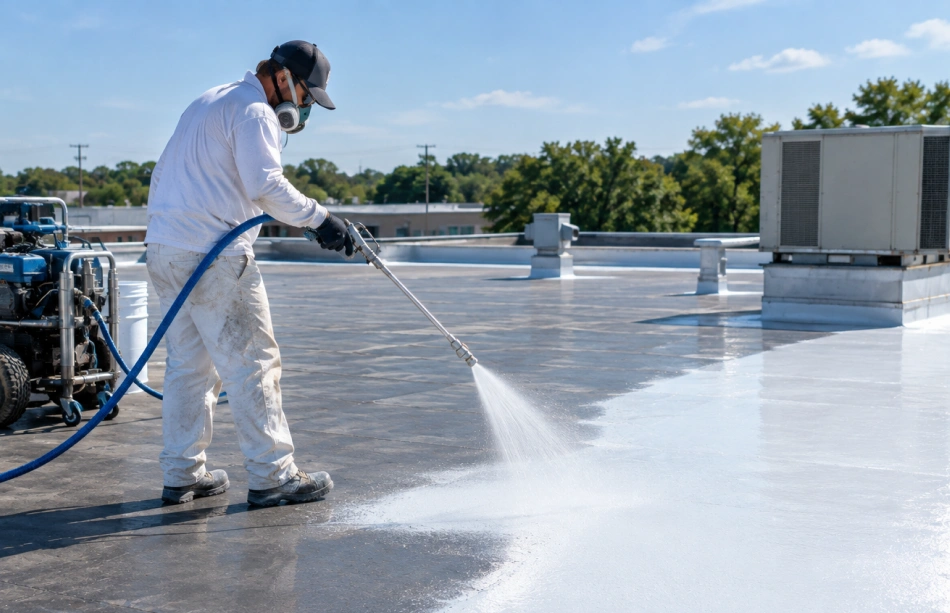
Spray polyurethane foam roofing is applied differently from roofing systems that depend on sheets, panels, or rolls of membrane. The material begins in liquid form and is sprayed across a properly prepared surface, where it expands and cures into a lightweight, continuous layer. Because the foam conforms to the contours beneath it, the finished surface can adapt to irregular roof shapes, penetrations, fasteners, and other details that may require multiple joints with traditional roofing materials. That seamless characteristic is particularly useful when a property owner wants to reduce the number of vulnerable seam locations across an aging commercial roof.
Preparation is critical before any spray foam roof installation begins. The existing surface needs thorough cleaning so dirt, debris, and other materials do not interfere with adhesion, and substrate problems that could affect the application need to be addressed before they disappear beneath the new layer. Surrounding structures and areas that should not receive foam also need precise masking before spraying starts. Taking time with these early steps helps create an appropriate bonding environment instead of relying on the foam to cover unresolved surface conditions.
Moisture investigation can also be part of the preparation process. Infrared drone technology allows us to look for temperature differences across the existing roof that may indicate wet insulation or another hidden moisture concern. If the assessment identifies an area that needs additional attention, it can be investigated before the new system is applied. That matters because commercial spray foam roofing should begin with an understanding of the conditions beneath the finished surface, not simply cover a problem that may continue developing underneath.
Once the roof is ready, the liquid material is sprayed evenly across the prepared area. The expanding foam fills minor gaps and conforms around fasteners and other roof details as it cures, creating a continuous surface without the heavy mechanical seams found in many traditional systems. Uniform application is important because consistent thickness contributes to both weather protection and the insulating characteristics associated with spray foam insulation roofing. Field management monitors the application so attention remains on coverage, thickness, surface conditions, and the details around the roof.
Important parts of our application process include:
After the foam has cured, a spray foam roof coating becomes part of protecting the finished system from direct environmental exposure. The completed assembly combines the insulating characteristics of the foam with a continuous surface designed to manage moisture without relying on numerous membrane seams. This approach can be especially useful for irregular commercial roof geometries where creating a seamless layer around existing details offers a practical advantage.
Spray foam can also provide another option for owners who want to renew an aging roof without automatically moving into a complete tear-off. Whether that approach is appropriate depends on the existing roof, moisture conditions, substrate readiness, and other property-specific factors. We inspect first and explain what we find so the recommendation reflects the roof in front of us rather than assuming every aging commercial system requires the same solution.
An aging commercial roof does not always mean the building immediately needs a complete teardown, but covering an existing system without understanding its condition can create a different set of problems. Moisture may already be trapped beneath the surface, damaged substrate areas may require attention, or sections of the existing assembly may not provide an appropriate foundation for new material, which is why Spark Roofing, LLC begins by evaluating what is already there. Infrared drone technology can help us identify temperature differences that may indicate wet insulation or hidden moisture, while physical assessment provides additional information about surface conditions, penetrations, fasteners, and areas that may need preparation or repair before application. When the existing roof is suitable for renewal, the spray-applied material can conform across complex contours and create a continuous layer without introducing the numerous mechanical joints found in many sheet-based roofing systems. That gives property owners a way to consider roof renewal while also adding thermal resistance through the insulating properties of the cured foam.
The same assessment-first approach matters when a property owner is considering spray foam roof repair rather than a larger roofing project, because the appropriate work depends on the location, extent, and underlying cause of the problem rather than the size of the visible symptom. Aaron and Mike bring more than 25 years of remodeling and general contracting experience to the way we evaluate buildings, helping us consider how moisture above the roofline may affect insulation, interior finishes, equipment, inventory, and other parts of the property below. Field management oversees active applications, completed labor is backed by our 5-year workmanship warranty, and Spark Roofing, LLC is fully licensed and insured, giving commercial customers concrete information about the process and the people responsible for the work. If another flat-roof solution fits the building better, we can also discuss TPO roofing, or evaluate localized problems through commercial roof repair rather than steering every property toward one material. For spray foam roofing in Harrison, OH, start with an assessment of the roof you have now so we can explain its condition, identify concerns that should be addressed first, and help you determine whether a seamless renewal system is the right next step.
The roofing material is applied in liquid form and expands as it cures, allowing it to conform directly to the prepared roof surface, minor gaps, fasteners, and irregular contours. Because the foam is sprayed continuously rather than assembled from numerous separate sheets, it can create a monolithic layer with fewer vulnerable mechanical seam locations across the finished roof.
It may be possible to renew an existing roof with a spray-applied system, but the current roof needs to be evaluated first. Surface condition, substrate readiness, adhesion, and existing moisture can all affect whether application is appropriate. We inspect the roof and address necessary preparation rather than assuming foam should simply be sprayed over every aging roofing system.
Infrared drone technology can identify temperature differences that may indicate wet insulation or hidden moisture beneath an existing roof surface. This gives us additional information about areas that may need closer investigation before application. Identifying those concerns first helps avoid intentionally covering suspected moisture conditions beneath the new roofing layer without further evaluation.
Yes. The cured foam has insulating properties that add thermal resistance as part of the roofing assembly. This can make the system appealing to commercial property owners who want both weather protection and added insulation from the same applied layer. Actual building performance still depends on the complete roof assembly, property design, existing insulation, and other conditions.
Localized damage may be repairable depending on its cause, extent, and the condition of the surrounding system. We evaluate the affected area before recommending the appropriate work so the repair addresses what is actually happening. When broader problems are present, we can explain whether a more extensive restoration or another roofing direction should be considered.
Renew your aging roof with a seamless spray-applied system, careful surface preparation, field oversight, and a 5-year workmanship warranty on completed labor.