Refer a Client and Earn Up to $500 Cash
Wind Damage Roof Repair
Strong winds can lift shingles, break seals, and leave parts of your roof exposed to rain. We inspect visible and hidden damage, explain what the wind affected, and repair the areas that need attention before water gets inside.
Strong winds do not have to remove an entire section of roofing to create a problem, because lifted shingles, broken adhesive seals, loosened flashing, and damaged edges can leave the layers below more vulnerable to rain. Some wind damage is easy to spot from the ground, but creased shingles or loosened materials may remain in place and make the roof look normal even after their ability to protect the home has been affected. Once water finds one of those openings, a problem that started on the exterior can begin affecting underlayment, decking, insulation, and interior areas. Our wind damage roof repair in Harrison, OH, starts with a careful inspection so you know what the wind actually affected before deciding what needs to be repaired. Spark Roofing, LLC looks at both obvious damage and less visible signs of uplift so the recommendation reflects the condition of the roof rather than assumptions based only on how strong the storm felt.
We inspect shingles, roof edges, ridge caps, flashing, hips, and other areas where wind pressure can loosen or disturb roofing materials. Close-up inspection helps us identify creased shingles and broken adhesive bonds, while infrared drone technology can provide additional information when hidden moisture beneath roofing materials is a concern. If damage is limited, affected materials can be removed and replaced while roofing that remains functional is left in place instead of turning a focused problem into unnecessary work. Repair planning also considers how replacement materials fit with the existing roof and how vulnerable edges, flashing points, and ridge areas should be re-secured. If high winds have moved or damaged part of your roof, let us take a careful look and explain what needs attention before the next rain has an easier path inside.
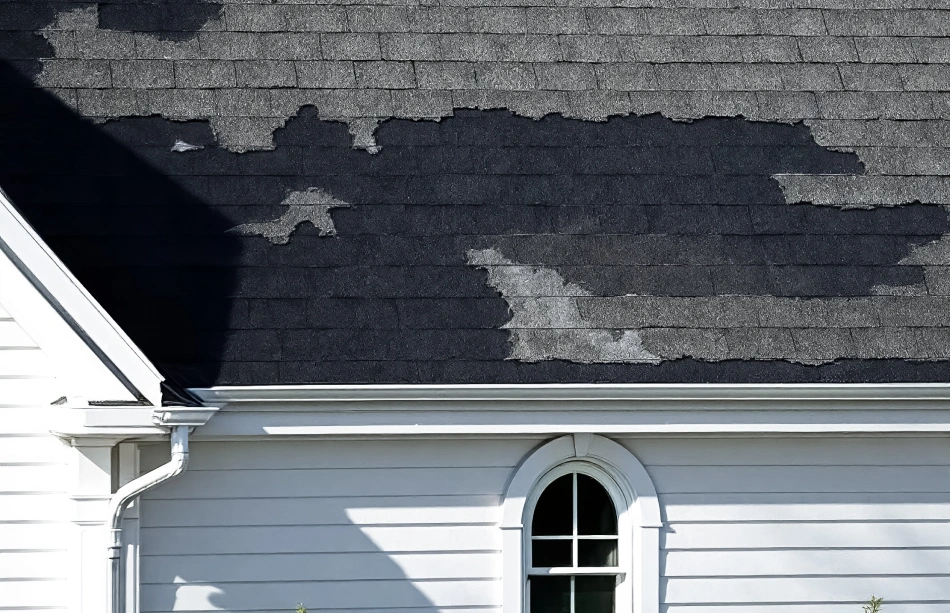
A wind damage roof inspection needs to look beyond the empty spots where shingles are obviously missing. Wind pressure can get beneath roofing materials and lift them without carrying them completely away. A shingle may settle back into position after the storm while still having a broken adhesive seal or a crease caused by movement. From the ground, that damage can be difficult to recognize even though the affected area may no longer perform the way it did before the wind event.
Roof edges deserve close attention because they are directly exposed to wind forces. Ridge caps, hips, flashing, and perimeter materials can also loosen or shift when strong gusts move across the roof. If those details are disturbed, rain may find a path beneath roofing materials even when most of the roof still looks intact. We inspect these areas as part of the overall roof condition instead of limiting the evaluation to the first missing shingle we find.
Close-up inspection helps us look for lifted materials, creases, damaged edges, loose flashing, and broken shingle bonds. Infrared drone technology can provide another layer of information when moisture beneath the surface is suspected. Temperature differences can point us toward areas that deserve closer investigation, helping us look beyond what is immediately visible. We use that technology to support the physical inspection, not as a substitute for actually evaluating the roof.
Once the damage is understood, roof wind damage repair can be planned around the affected areas. Damaged sections may need to be carefully removed and replaced with suitable roofing materials, while loosened perimeter edges, ridge caps, and flashing points may need to be re-secured. Reinforced nailing patterns can be used where appropriate as replacement materials are installed. The goal is to repair what the wind compromised and restore the affected sections without disturbing sound roofing unnecessarily.
Important parts of our wind damage process include:
A blown off shingles repair may sound straightforward when only a few shingles are missing, but replacing the visible pieces without checking the surrounding area can leave other wind-related problems undiscovered. Nearby shingles may have been lifted without being removed, and flashing or ridge materials may have moved during the same event. We want to understand the full affected area before saying the job is finished.
The scope of wind damage restoration should therefore match what the inspection shows. A small area of damage may call for a focused repair, while more widespread uplift or repeated failures can require a broader conversation. We show you what we find, explain the options clearly, and recommend work based on what the roof needs rather than assuming high winds automatically mean replacement.
Seeing shingles in the yard after a windy night makes it obvious that something happened, but the number of missing shingles does not tell you everything about the condition of the roof. Spark Roofing, LLC checks the surrounding materials, adhesive seals, flashing, ridge caps, perimeter edges, and other vulnerable areas so we can determine whether the wind caused a focused problem or affected a larger section. Aaron and Mike bring more than 25 years of remodeling and general contracting experience to that evaluation, helping us consider not only the visible roofing material but also what water intrusion could mean for the decking, insulation, ceilings, walls, and other parts of the property. When the damage is limited, we focus the repair on the areas that need it and leave serviceable roofing alone rather than using a few missing shingles as a reason to recommend more work. You get a clear explanation of what we found, why we recommend the repair, and what should happen next.
Field management keeps attention on the work as damaged materials are removed, replacement components are installed, and vulnerable roof details are re-secured. Spark Roofing, LLC is fully licensed and insured, offers 24-hour service when wind damage creates an urgent roofing concern, and backs completed labor with a 5-year workmanship warranty. If the wind damage is part of a broader severe-weather event, our storm damage roof repair service can address additional hail, debris, and storm-related concerns, while emergency roof tarping can provide temporary protection when part of the roof has been left exposed. Property owners dealing with an active leak can also review roof repair when the immediate concern is focused water intrusion rather than widespread storm damage. For wind damage roof repair in Harrison, OH, tell us what you noticed after the wind passed through, and we will inspect the affected areas, explain what the roof needs, and help you address the damage before another round of rain makes the problem worse.
Missing shingles are one of the clearest signs, but wind damage can also include lifted or creased shingles, broken adhesive seals, loose flashing, shifted ridge caps, and damage around roof edges. Some of these problems are difficult to see from the ground, which is why an inspection can be useful after strong winds affect your property.
Yes. Wind can lift a shingle enough to break its adhesive seal or create a crease without removing it from the roof. The shingle may settle back down afterward and appear normal from below. A close-up inspection can help identify these less obvious conditions and determine whether the affected material should be repaired or replaced.
Not automatically. If wind damage is limited and the surrounding roofing remains in serviceable condition, focused repairs may be appropriate. We inspect the affected section and nearby materials before recommending a scope of work. Our goal is to address what the wind actually damaged rather than turn every missing shingle into a full replacement project.
Roof edges, ridge caps, hips, and similar areas can experience strong wind pressure because of their position on the roofing system. Materials in these locations may loosen, shift, or become vulnerable even when they remain attached. Checking these areas helps identify possible openings that could allow rain beneath the roofing materials after the storm.
An exposed section should be addressed quickly because rain can reach underlayment, decking, and other materials that are normally protected by the finished roof. Spark Roofing, LLC offers 24-hour service and emergency roof tarping when temporary protection is needed before permanent repairs can be completed. We can then assess the damage and explain the appropriate repair.
Get a careful inspection of lifted shingles, flashing, edges, and hidden concerns, plus clear repair guidance and a 5-year workmanship warranty.