Refer a Client and Earn Up to $500 Cash
TPO Roofing
Flat and low-slope roofs need a system built to manage water, sun, and changing temperatures. We install reflective TPO membranes with careful preparation, welded seams, and active field oversight.
Flat and low-slope commercial roofs face different challenges from steep roofing systems. Water needs to be managed across broad surfaces, seams need to remain secure, and the membrane receives ongoing exposure to sunlight and changing temperatures. If those parts of the system begin to fail, moisture can move beneath the surface and threaten insulation, interior spaces, equipment, inventory, and normal business activity. Working with a TPO roofing company in Harrison, OH, gives property owners access to a single-ply roofing option designed specifically around these commercial roof conditions.
Spark Roofing, LLC approaches TPO projects by looking at the entire assembly rather than treating the white membrane as the only important component. Insulation boards, attachment methods, seams, penetrations, mechanical curbs, and the supporting roof surface all contribute to the finished system. EagleView technology can help us map roof dimensions and layout details, while infrared inspection can provide additional information about possible trapped moisture. During TPO roofing installation, the membrane may be mechanically attached or fully adhered according to the planned system, and seams are joined using hot-air welding equipment to create fused connections between membrane sections. Field supervision keeps attention on these details while work progresses so the finished roof is built around the needs of the commercial property below it.
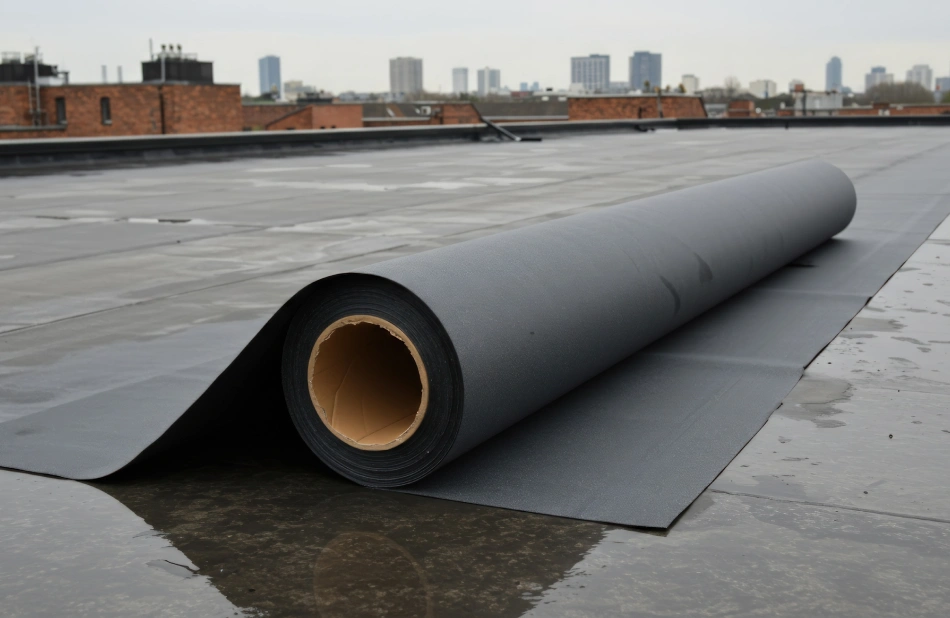
Thermoplastic polyolefin roofing is a single-ply system commonly used on flat and low-slope commercial buildings. One of its most recognizable features is its bright white surface. The membrane reflects a portion of the solar radiation that would otherwise be absorbed by darker roofing materials, which can help reduce heat absorption through the roof. For commercial property owners thinking about both weather protection and building performance, that reflective characteristic is one reason TPO is worth considering.
The membrane itself, however, is only one part of the system. A TPO membrane roofing project begins with understanding the existing roof and preparing the surface for the planned assembly. Insulation boards can be secured to the roof deck before the membrane is installed. Those boards contribute to the roofing assembly while providing an appropriate surface for the TPO system above them. Preparation matters because even a durable membrane needs the materials beneath it to support the installation correctly.
Once the underlying components are in place, the TPO membrane is rolled across the prepared roof. Depending on the system being used, the material can be mechanically attached or fully adhered. Mechanically attached systems use fastening methods designed to secure the membrane to the roof assembly, while fully adhered applications bond the membrane across the prepared surface. The appropriate approach depends on the roof and installation plan rather than a single method being used for every commercial property.
Seam installation is particularly important because separate sheets of membrane need to function together as a continuous water-resistant surface. TPO seams are hot-air welded using specialized equipment. Heat allows adjoining membrane sections to fuse together, creating a bonded seam designed to prevent water from moving between the sheets. Careful attention to seam integrity is essential across the roof, particularly around transitions and areas where the membrane meets other roofing components.
Commercial roofs also tend to contain more than open membrane surfaces. Mechanical curbs, vents, penetrations, drainage features, and other rooftop components can interrupt the layout. EagleView technology helps gather roof measurements and supports precision mapping around these features before and during project planning. Better dimensional information gives us a clearer understanding of the surface being covered and where additional installation details need attention.
Infrared inspection provides another useful tool when moisture is a concern. Temperature differences across a roof can indicate areas where moisture may be trapped beneath roofing materials. When appropriate, thermal imaging can help us investigate those conditions and focus additional attention where the readings suggest a potential concern. This can be useful when evaluating an existing system before TPO roof replacement or when checking conditions related to the roofing assembly.
Important parts of our TPO process include:
TPO also offers resistance to several conditions commercial roofs encounter regularly. The membrane is designed to handle ultraviolet exposure while maintaining flexibility through changing temperatures. It also provides resistance to certain chemical exposure and physical punctures, making it a practical option for many modern commercial facilities. Those material characteristics still need to be supported by correct installation, particularly at seams and around rooftop details where water intrusion can develop if the system is not handled carefully.
For building owners considering TPO commercial roofing, our goal is to explain how these parts work together rather than presenting the membrane as a one-step solution. A reflective surface, insulation, secure attachment, fused seams, careful detailing, and active oversight all contribute to the roof you ultimately rely on. Understanding those components makes it easier to evaluate whether TPO fits the needs of your property.
A commercial roof can cover a large area that is difficult to evaluate from the ground. That makes clear assessment and project planning especially important when you are deciding whether an existing TPO system needs attention or whether a new TPO roof makes sense for the building. At Spark Roofing, LLC, we start with the conditions on the property rather than assuming every flat roof needs the same solution.
If an existing TPO membrane has a localized problem, the first question should not automatically be whether the entire roof needs to come off. The location and extent of the damage, seam conditions, moisture findings, and overall state of the system all matter. When the problem is limited, TPO roof repair may be an appropriate direction. If the membrane has widespread deterioration or other conditions make continued repair impractical, we can explain why replacement should be considered. This repair-first approach keeps the recommendation connected to what the roof actually needs.
When a new TPO system is appropriate, planning considers the roof from the supporting surface upward. Insulation, membrane attachment, seams, penetrations, mechanical curbs, and other details need to function together. A flat commercial roof may appear simple from a distance, but every interruption in the surface creates another location where the roofing system needs careful treatment. That is why field supervision remains an important part of our process while installation is underway.
Our technology also helps us gather information across large commercial surfaces. EagleView measurements support layout planning and material calculations, particularly around rooftop features that complicate an otherwise broad flat area. Infrared technology can help identify temperature variations that may point toward moisture beneath the surface. These tools give us additional information to consider alongside the physical condition of the roof.
Aaron and Mike bring more than 25 years of remodeling and general contracting experience to the way Spark Roofing, LLC approaches properties. That broader background helps keep the focus on what the roof is protecting below. Water entering a commercial building can threaten insulation and interior finishes, but it can also affect inventory, equipment, tenant spaces, and normal operations. The roofing system needs to be considered in the context of those potential consequences.
Property owners also deserve concrete information about the business working above their facility. Spark Roofing, LLC is fully licensed and insured, and completed labor is backed by our 5-year workmanship warranty. Dedicated field management adds oversight during active projects. Instead of asking customers to rely on generic promises, we want these specific parts of our process to show how we approach the work.
If you are already dealing with a localized commercial leak or membrane problem, our related commercial roof repair service may provide the focused attention the roof needs. If you are comparing other flat and low-slope systems, our EPDM roofing and spray foam roofing services provide additional options that can be considered according to the property and roofing conditions.
Choosing a roofing system should start with understanding the building rather than choosing a material from a list. Tell us what is happening with the roof, what concerns you have noticed, and what the property needs to protect below. We can assess the conditions, explain the available options, and help you determine whether TPO is an appropriate direction. When you need a TPO roofing company in Harrison, OH, Spark Roofing, LLC can help you move from uncertainty about the roof to a clearer plan for protecting the building.
TPO is a single-ply membrane roofing system commonly used on commercial buildings with flat or low-slope roofs. Its flexible membrane creates a protective surface over the roof assembly, while the bright white finish reflects solar radiation. TPO systems can incorporate insulation boards, different attachment methods, and hot-air welded seams as part of the completed roof.
TPO membrane sections are joined using specialized hot-air welding equipment. The heat fuses adjoining membrane surfaces together to create a bonded seam rather than relying only on a surface sealant. Because seams are critical areas on a single-ply roof, careful welding and field attention are important parts of creating a continuous barrier across the roofing system.
The bright white surface of TPO reflects solar radiation and reduces the amount of heat absorbed by the roofing surface compared with darker materials. Insulation within the roofing assembly can also contribute to thermal performance. Actual building energy use depends on multiple factors, but TPO’s reflective surface is one reason commercial property owners consider the material.
Some TPO problems may be repairable when the damage is localized and the surrounding membrane remains in suitable condition. We consider the extent of the damage, seam conditions, moisture findings, and overall roof condition before recommending a direction. If a focused repair makes sense, we can discuss that rather than assuming the property needs complete replacement.
Infrared technology identifies temperature differences across the roof that may indicate trapped moisture beneath roofing materials. On a broad commercial surface, this can provide useful information when moisture is not obvious visually. We use thermal findings alongside a physical assessment to help focus further investigation and understand conditions beneath the membrane.
Planning TPO roofing work? Get careful membrane preparation, welded seam attention, field oversight, and a 5-year workmanship warranty on completed labor.